

Sale products
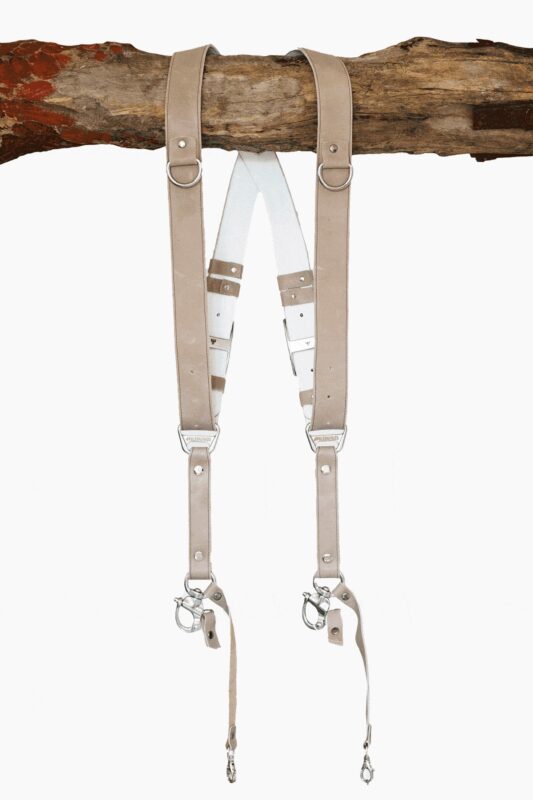
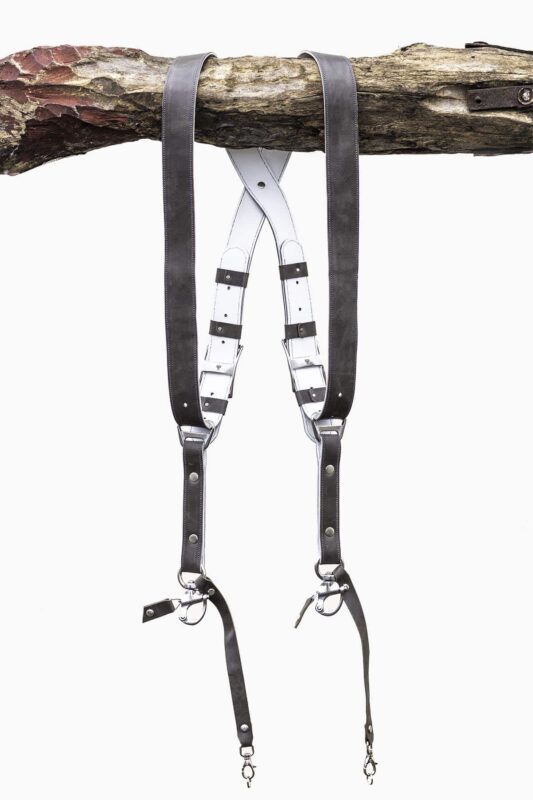
Sabbia Vintage Camera Harness
Original price was: 220.00 €.199.00 €Current price is: 199.00 €.
LEATHER STRAP & HARNESS
-10% Hot

Your camera came with a black or gray nylon strap. Any professional photographer will tell you: that strap isn’t the final solution. It’s just the starting point.
A practical guide to buying camera straps for photographers in 2026: how to choose the right model based on your style, camera bodies, and intended use. Comparison of single-strap and double-strap designs, materials, hardware, prices, and recommended models.
"The difference between an amateur and a professional photographer isn’t the camera. It’s the care with which they choose every accessory that holds it." Professional wedding photographer
Camera straps for photographers fall into two main categories: single neck straps (for a single camera, the classic style we all know) and double or harness straps (for carrying two bodies at the same time).
If you use one camera at a time, choose the single strap. If you regularly shoot with two bodies (weddings, reportage, sports), the double strap is a choice that will change the way you work. There is no absolute “best” option: it depends on your use.
A quality single strap costs between 70 and 150 euros. A premium double strap costs between 200 and 350 euros. Both are long-term investments: 810 years of professional use.
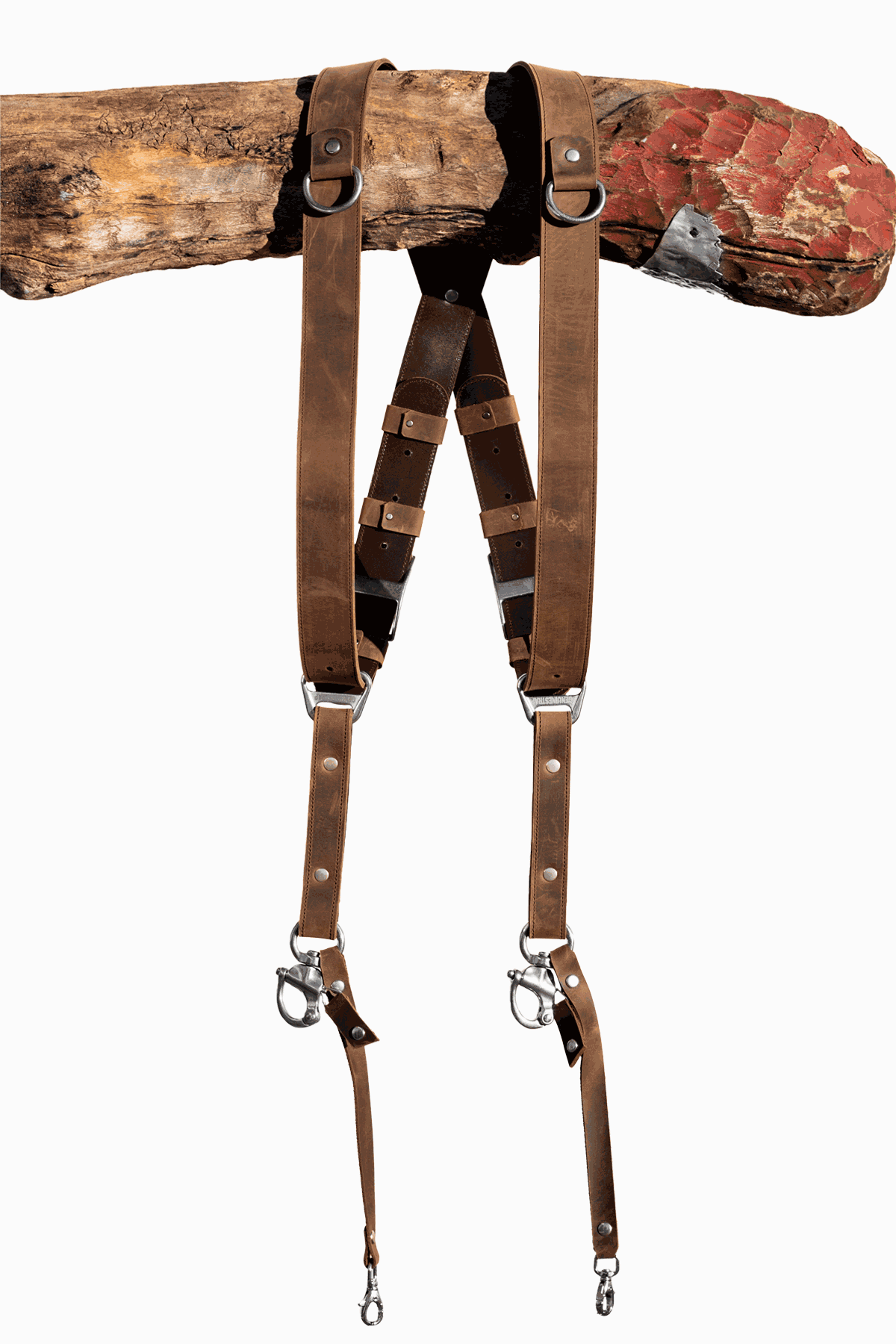
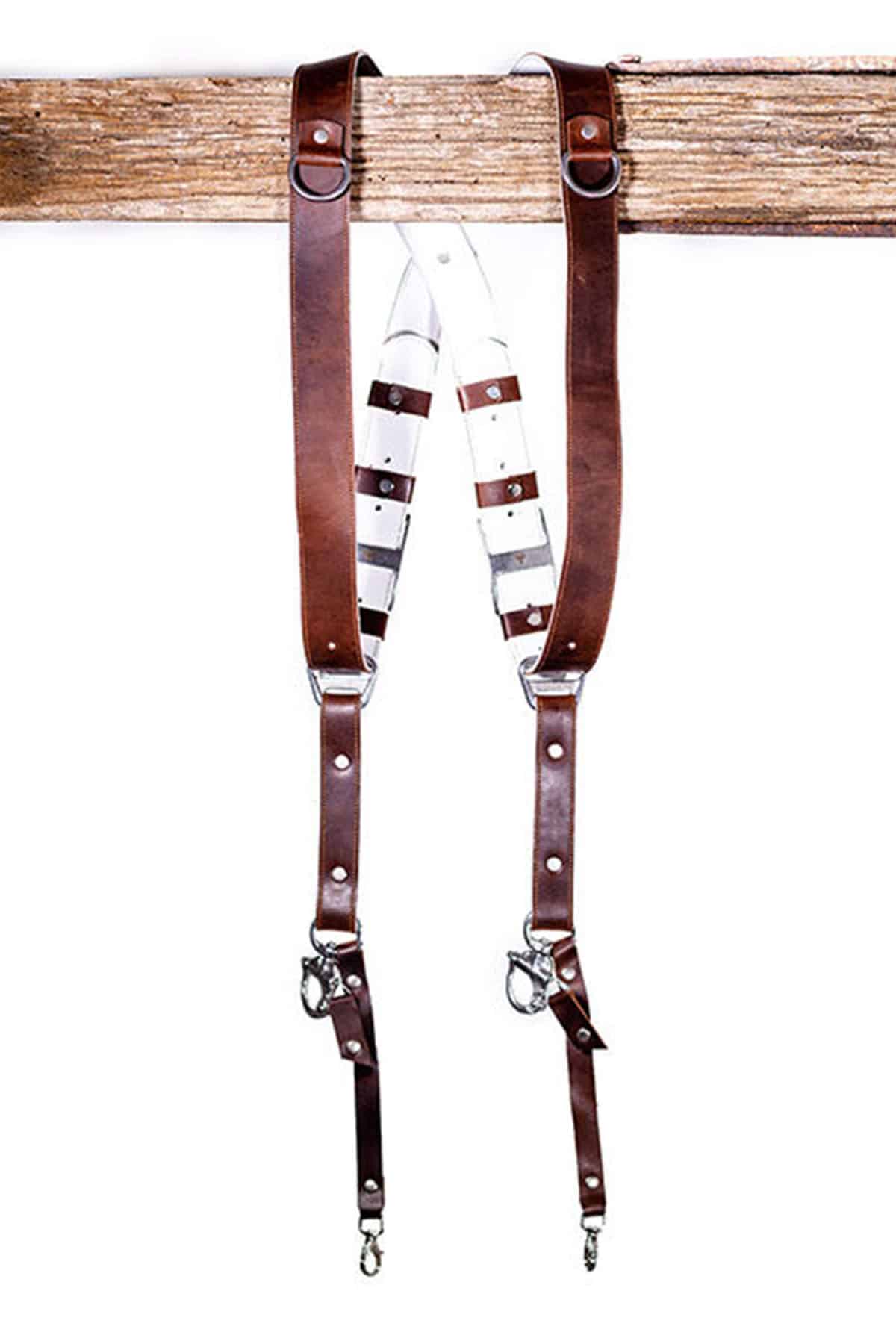
Full-grain Italian leather is the superior material. It lasts three times as long as nylon, develops a unique patina, and has an aesthetic suited to professional settings. Nylon is more affordable and has decent technical durability, but it fades and loses elasticity within 23 years.
1/4-inch screws, D-rings, quick-release buckles: all made of stainless steel. It’s more expensive than aluminum or ABS plastic, but it withstands salt, moisture, and impacts for decades. The difference becomes apparent by the eighth year: stainless steel looks like new, while aluminum is oxidized.
Stainless steel hardware costs 34 times as much as plastic. It lasts ten times longer. The value is excellent.
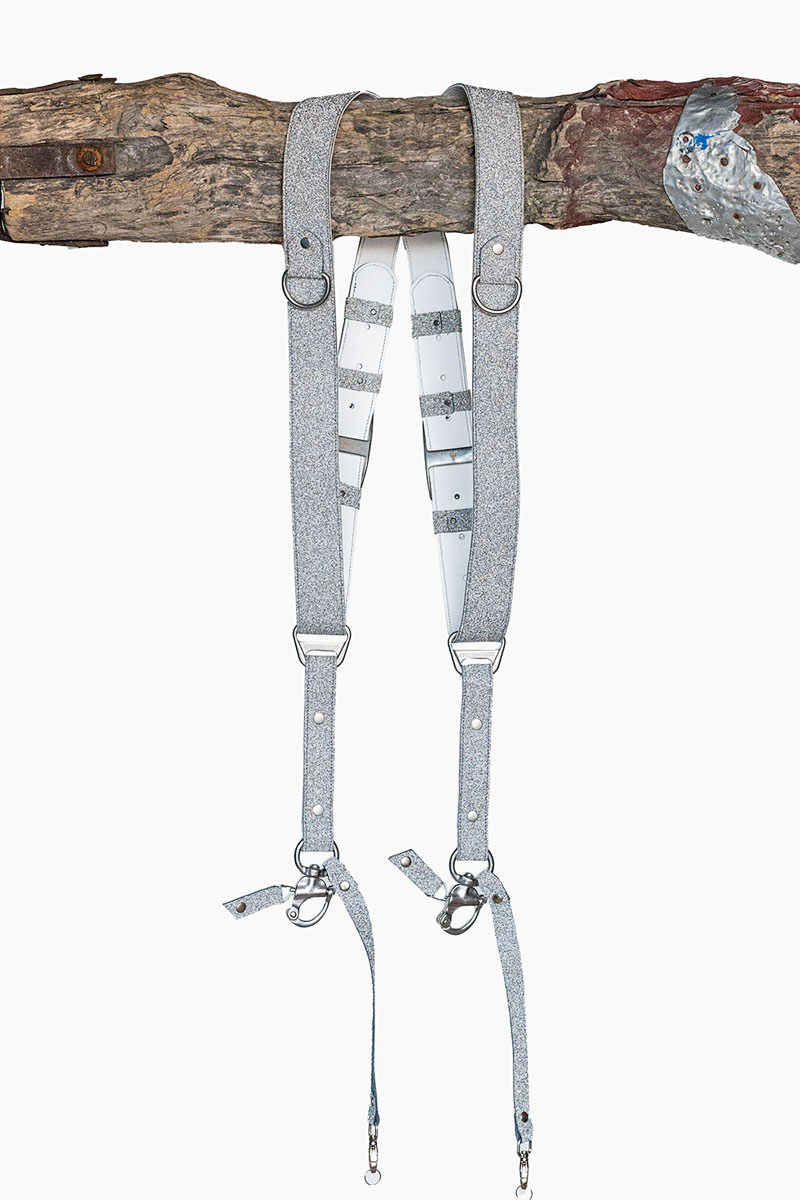
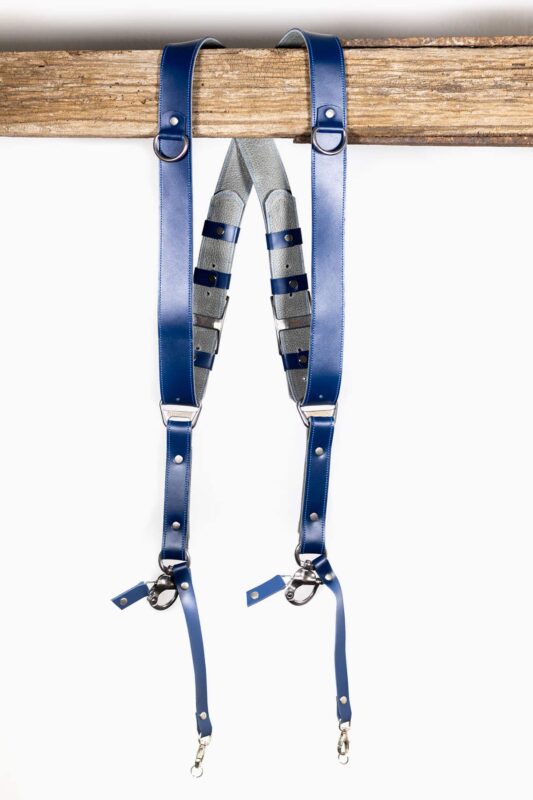
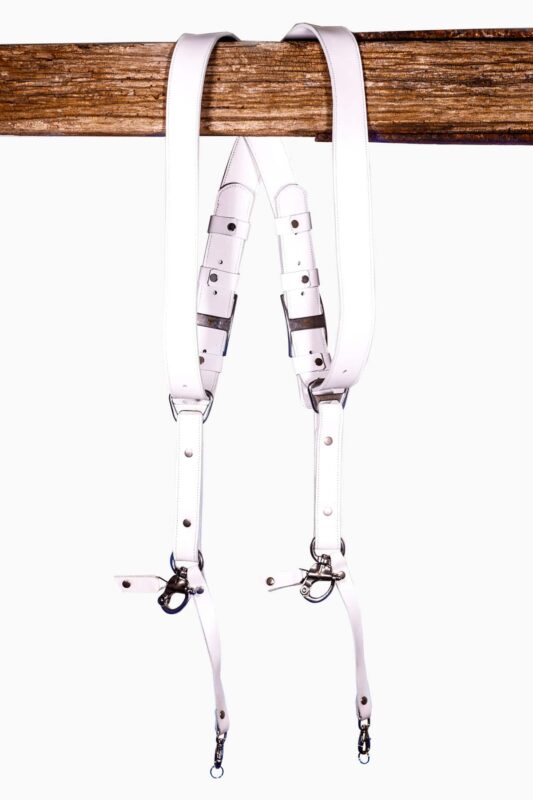
Under studio lights, in the summer, after 4 hours of a wedding: you sweat. The breathable white inner padding prevents dark sweat stains on your shirt. It’s an option available only in premium versions but makes a huge difference during the hot months.
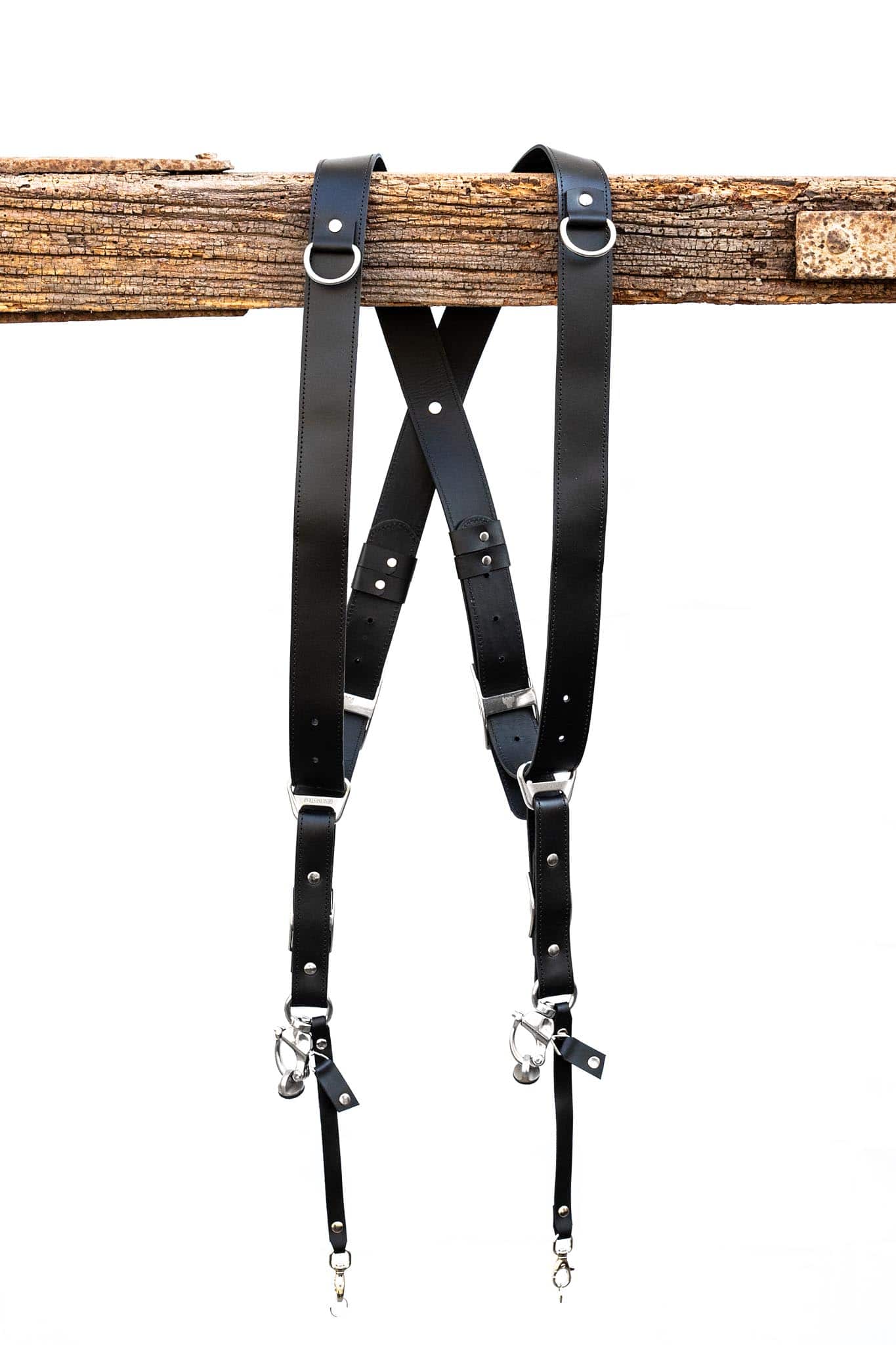
Vintage brown leather for classic settings. Black Cruzan for formal occasions. Metallic Silver Gala for fashion and events. The shoulder strap is visible in backstage photos and affects your professional image.
All GenuineStrap shoulder straps use universal 1/4-inch screws. Compatible with Canon, Nikon, Sony, Fujifilm, Leica, Panasonic, and Olympus. Works with full-frame, mirrorless, and medium-format cameras.
| Price | Type | Materials | Durability |
|---|---|---|---|
| 4080 euros | Single industrial | Chrome-plated leather + plastic | 23 years |
| 80150 euros | Premium Italian single | Vegetable-tanned leather + stainless steel | 810 years |
| 200280 euros | GenuineStrap double strap | Italian leather + stainless steel + padding | 810 years |
| $280$350 | Double with breathable padding | Premium leather + white padding | 10+ years |
| 350+ euros | Limited editions | Special leathers | 10+ years |
Even the best leather shoulder straps have a limited lifespan. Recognizing the right time to replace it prevents the risk of failure in the middle of a photo shoot. Four concrete signs.
Cracks in the leather at the folding points. If the leather is visibly cracking at the sliders or at the points where it bends, it’s a sign that it has lost its structural elasticity. Delayed maintenance won’t fix this damage.
Loose stitching. If you see even a single thread coming loose at stress points (camera attachments, central clasps), have the strap inspected. A loose stitch can give way completely in just a few weeks.
Clips that open accidentally. If the clip no longer snaps shut with a distinct click, the internal spring is likely worn out. It can be replaced as a spare part, but this is a sign that the product has seen a lifetime of use.
Leather that 'smells' even after deep cleaning. Rare, but it can happen with years of accumulated sweat. It indicates that the internal fibers have trapped substances that are impossible to remove. It’s time for a new shoulder strap.
With professional use, at least 810 years. Several long-time customers are in their tenth year with the same model, which has become a signature piece of their photography studio.
Yes. You have a 30-day no-questions-asked return policy. Full refund if you’re not satisfied, no explanation required.
The Vintage Brown is the safest choice: 90% of photographers love it, it goes well with any camera body, and its durability is guaranteed. Add the initials engraving service for personalization.
A camera strap is the first accessory that directly impacts the quality of your daily work. Comfort, safety, aesthetics, and durability are all qualities that will pay you back threefold compared to the initial cost.
Don’t wait for your next “neck crisis” or your next gear upgrade. The right camera strap is an affordable upgrade that enhances every use of your camera for the next 10 years.
No account yet?
Create an Account














 Camera Straps Single
 Camera Straps Neck
 Camera Straps Wrist
 Other Camera Accessories
 Home Decor
 Mouse Pads
 MacBook Sleeves
 Desk Mats
 Bottle Lamps
 Edison Lamps
 Belts
Belts Bow Ties
 Keychains
 Wedding & Formal
 Camera Bags
 Belt Pouches
 Handbags
 Wallets & Cases
 USB Stick
 Engraved Panoply
 Engraved Icons