

Sale products
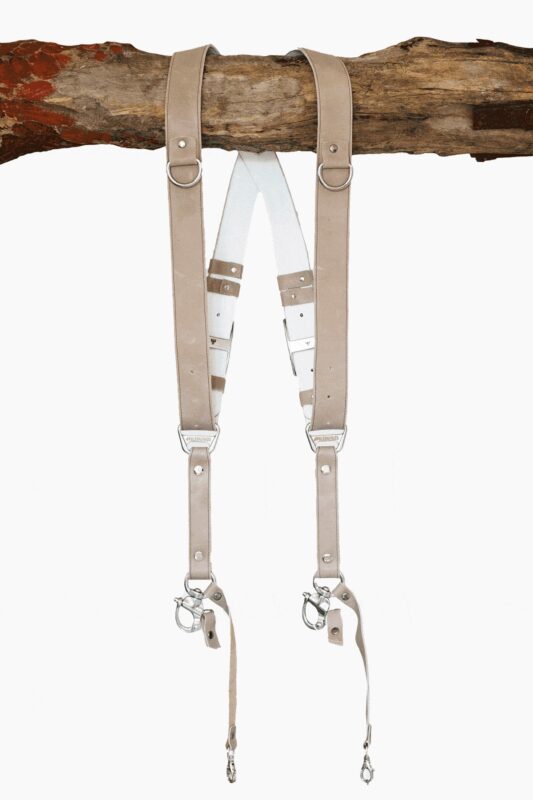
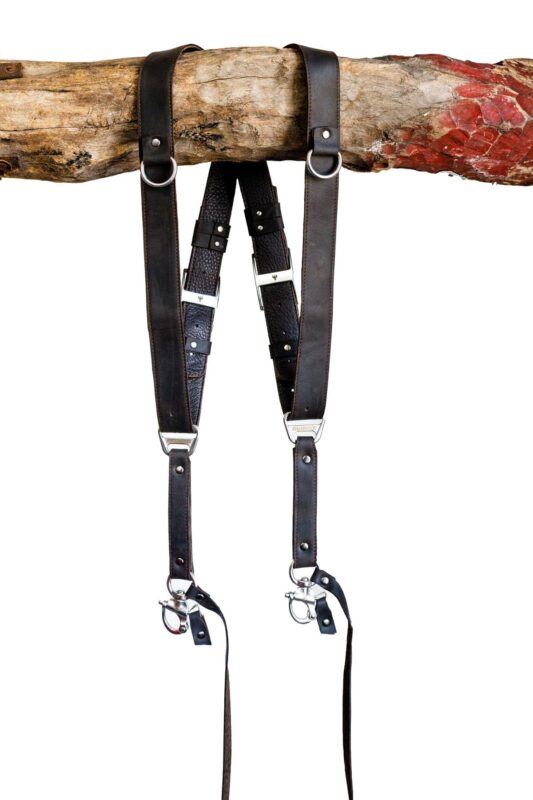
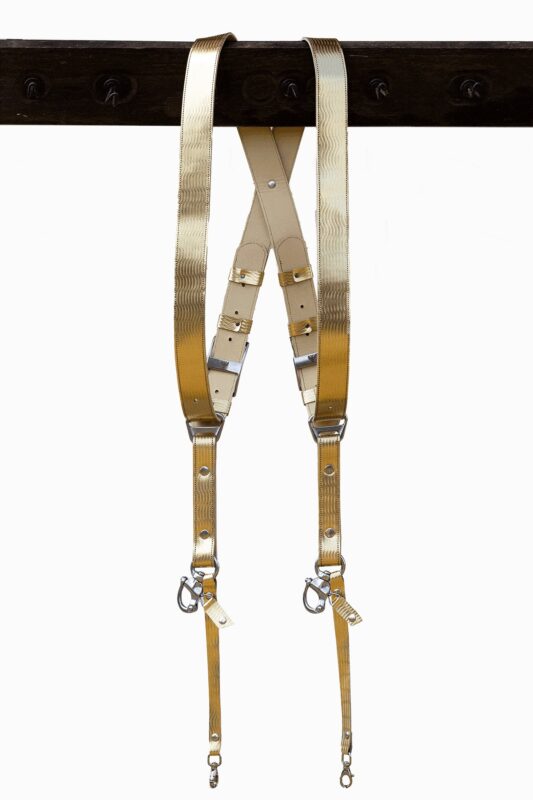
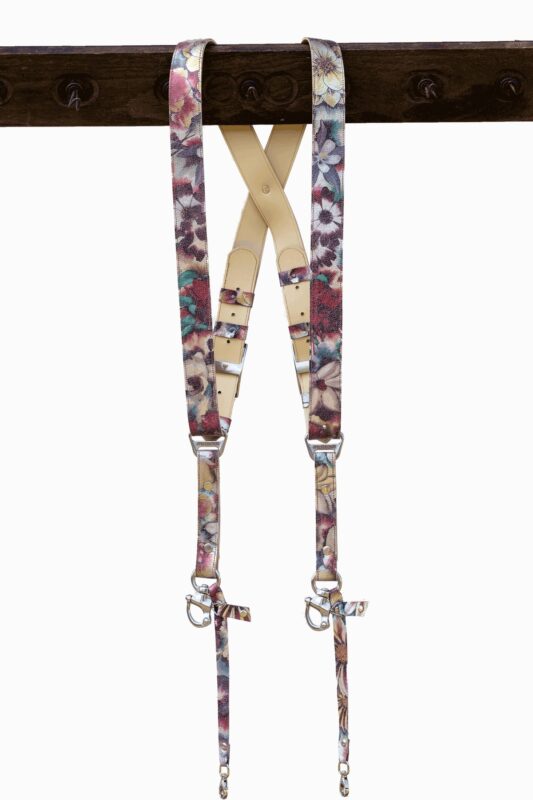
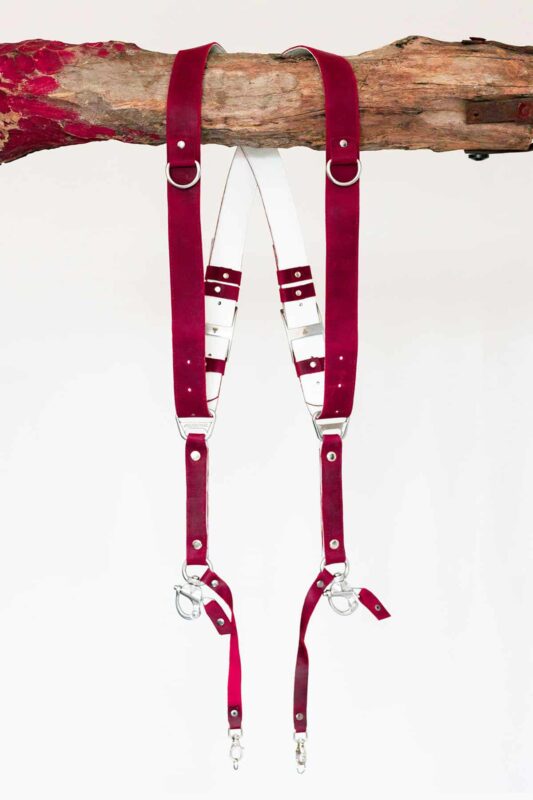
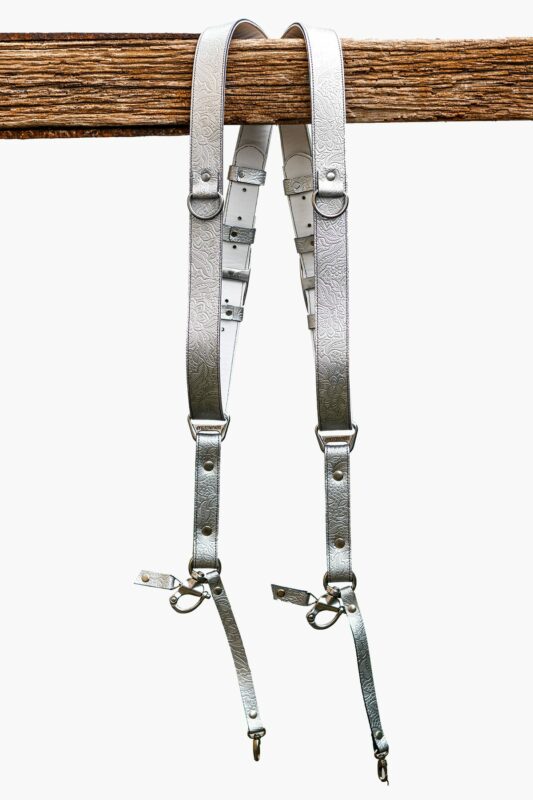
Sabbia Vintage Camera Harness
Original price was: 220.00 €.199.00 €Current price is: 199.00 €.
LEATHER STRAP & HARNESS
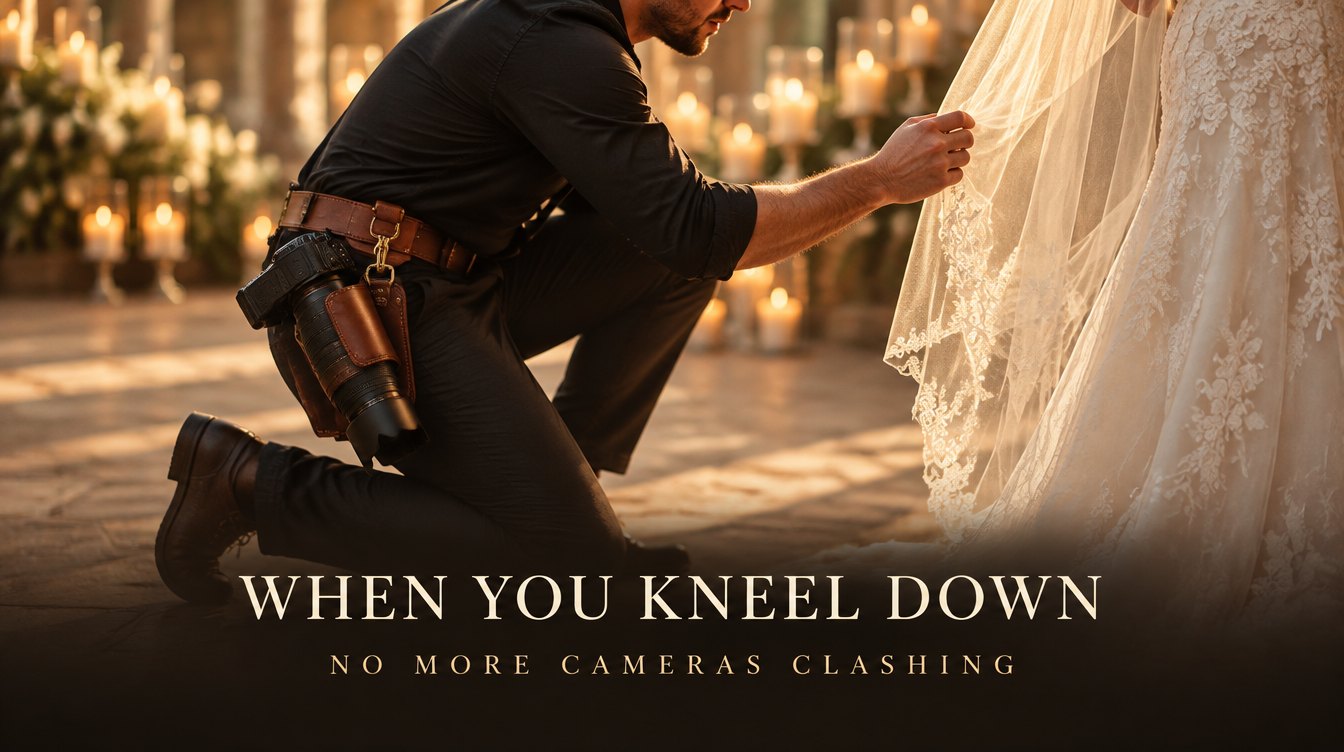
There is one exact moment when a dual camera strap stops working: when you kneel to fix the bride’s veil. Both bodies swing forward, clash into each other, and if you are average height or shorter, one of them hits the floor.
This is not gear nerd trivia. It is the reason a lot of wedding photographers are moving to a camera belt holster, and it is worth understanding when that actually makes sense and when it does not.
In a recent discussion among wedding photographers the same problem came up from several people, different words, identical substance.
The moment you bend without paying attention the cameras knock into each other. And I am short: the moment I kneel down to shoot, one of them always hits the ground.
Wedding photographer
You can even crouch down to fix the bride’s veil without risking knocking or damaging the cameras.
Photographer, ten years on a holster
Two independent observations, same moment of the day. That is no accident: fixing the veil is the one action a wedding photographer performs dozens of times, always bending forward, always with both hands busy.
On a dual strap the cameras hang from a high point near your shoulders. When your torso rotates forward that point travels, and the bodies trace an arc that ends in front of your sternum. The deeper you bend, the longer the arc. At that point you have two objects of roughly one and a half kilos each swinging free at knee height.
On a holster the anchor sits at your hip, level with your pelvis. When you bend, the pelvis rotates with you and the camera stays still relative to your body. No arc, so no swing.
This belongs in the piece too, because no system is perfect for everyone.
Leather Photo Belt Holster Quick Release 2 Cameras 159
Two housings with 1/4 inch screw plates for two bodies, ready at your hips. Full grain leather, four colours, handmade.
Leather Photo Belt Holster Quick Release 1 Camera 119
The single camera version, for when the second body stays in the bag or you work with one lens.
One point that causes confusion: the holster mounts on a belt, and the belt is not included. Any belt up to 5 cm wide works, including the one you are wearing right now. If you want a dedicated belt that carries the load without deforming, there is the quick release leather belt at 39.
It is the first objection every time. The honest answer is that for the first two or three jobs it is, and then it stops being one. The motion is thumb on the button, lift, to the eye. Once it is automatic it is faster than pulling a strap over your head.
The second recurring doubt is about long lenses. A 70-200 works on a holster, but it shifts the balance and sticks out further when you walk between tables. If you often run a telephoto on one body and a standard zoom on the other, put the telephoto on your dominant hand side.
If the dual strap works for you, there is no reason to switch. The point is not that one system is better, it is that bodies differ and so do working days. If you have never had the veil problem, this article is not for you. If you have had it three times in the past month, you already know exactly what we are talking about.
If your issue is where the weight ends up rather than where the cameras end up, the right question is a different one, and we handle it separately: shoulders or hips, and at what cost to your back.
Holsters come in four colours, in vegetable tanned full grain leather, with free shipping.
Yes. The plate screws into the 1/4 inch thread on the body, not the lens. With very long, heavy optics use the lens collar if the lens has one.
No. The holster has adjustable loops that take belts up to 5 cm. Use your own, or the matching quick release belt.
Yes, plenty of people do: one body on the holster and one on a single camera strap for the lens you reach for most.
The housing retains the body and the plate screws down firmly. As with any quick release system, check the connection with a short tug before you start working.
No account yet?
Create an Account











 Camera Straps Single
 Camera Straps Neck
 Camera Straps Wrist
 Other Camera Accessories
 Home Decor
 Mouse Pads
 MacBook Sleeves
 Desk Mats
 Bottle Lamps
 Edison Lamps
 Belts
Belts Bow Ties
 Keychains
 Wedding & Formal
 Camera Bags
 Belt Pouches
 Handbags
 Wallets & Cases
 USB Stick
 Engraved Panoply
 Engraved Icons