

Sale products
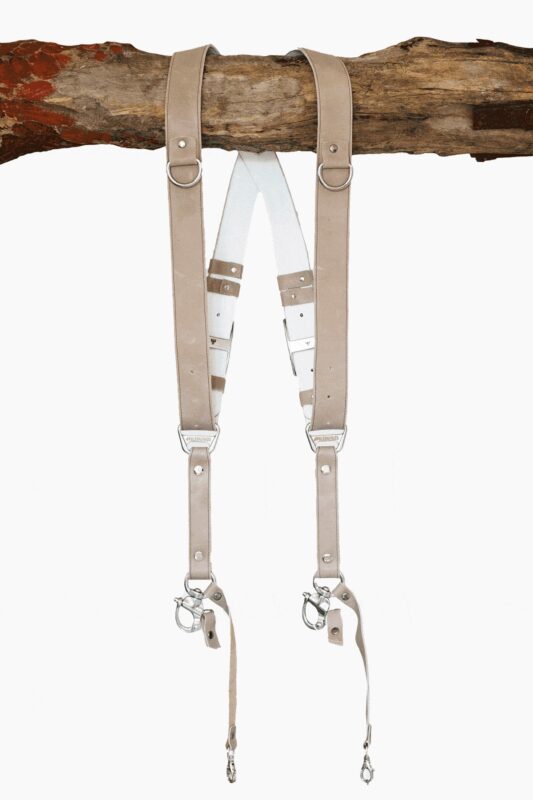
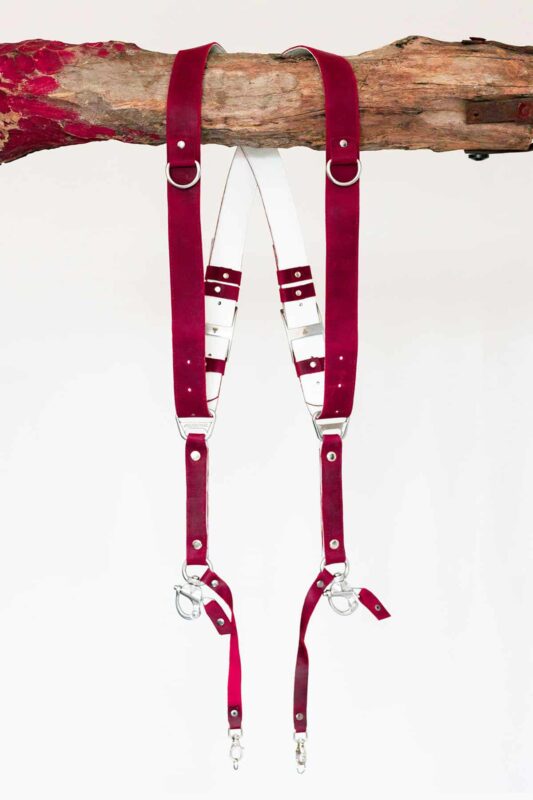
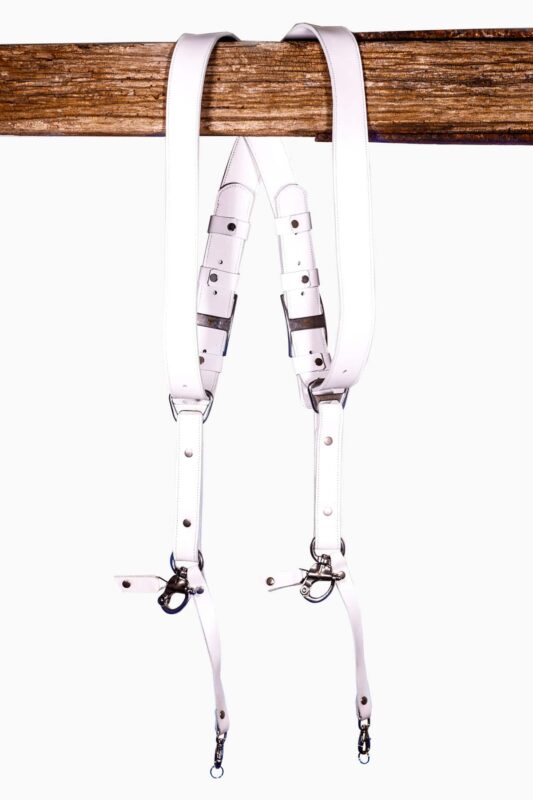
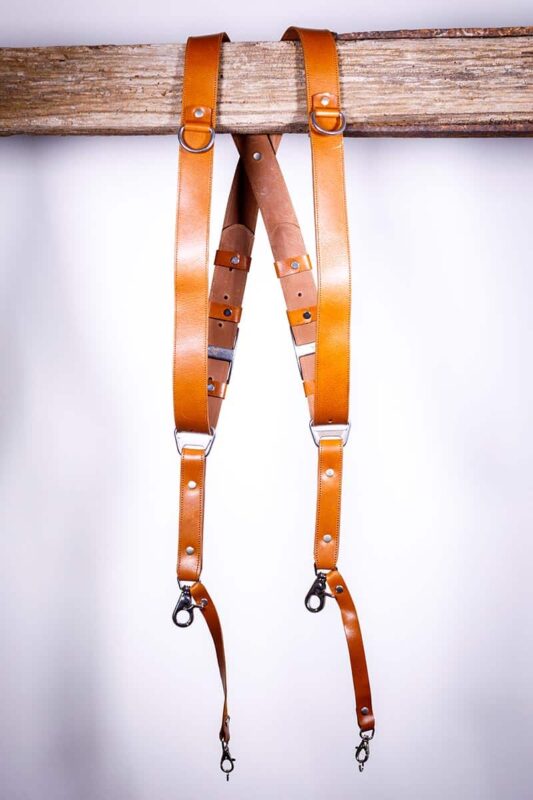
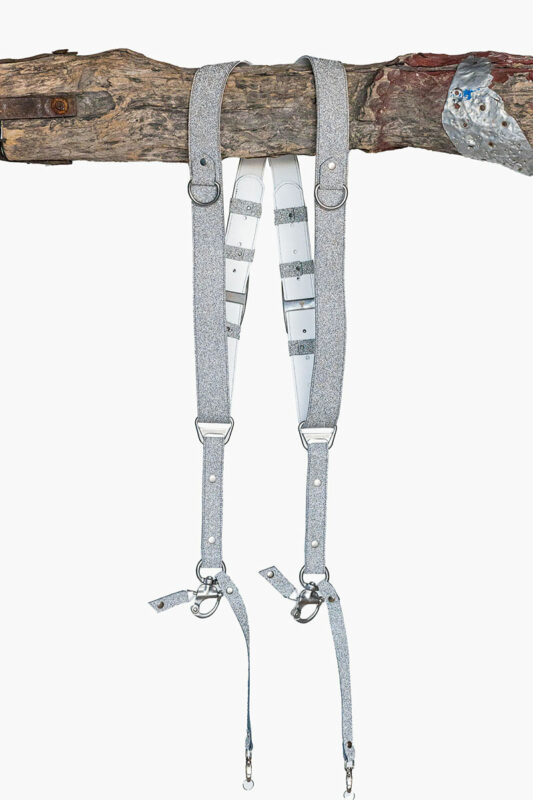
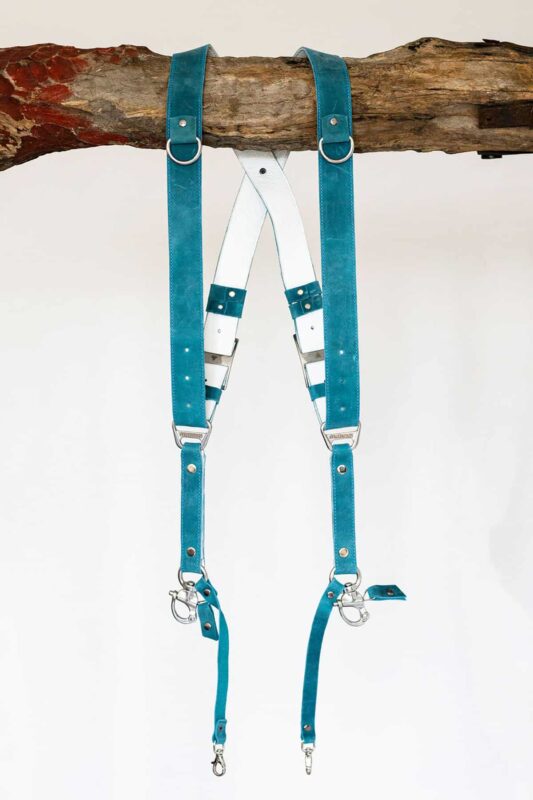
Sabbia Vintage Camera Harness
Original price was: 220.00 €.199.00 €Current price is: 199.00 €.
LEATHER STRAP & HARNESS
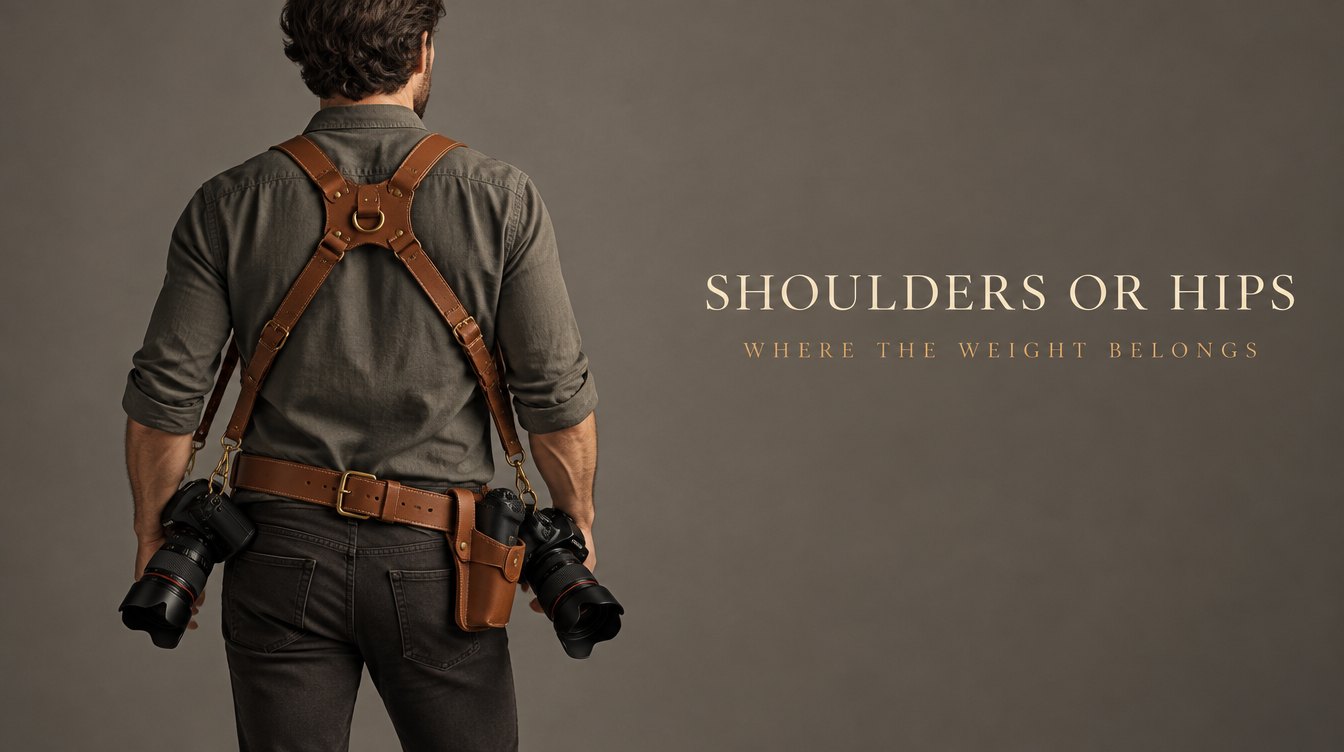
Every discussion about carrying two cameras ends up in the same place: where to put the weight. On your shoulders your neck hurts, on your hips your back does. The real question is not which system is better, it is which ache you are willing to accept.
This article takes seriously the smartest objection we have read on the subject, instead of pretending it does not exist.
You moved the weight from a high system (spine, shoulder girdle) to a low one (pelvis), with an obvious advantage over the first. But the bill for the second one is coming too: overloading the femoral heads is not something to underestimate.
Comment on a video about the photo belt
That is correct. Moving four kilos of gear from your shoulders to your pelvis does not make four kilos disappear. It moves them onto different joints, which have different limits. Anyone telling you a belt solves everything is selling you something.
That said, the pelvis is built to carry load differently from the cervical spine. The trekking backpack has existed for a century and loads the hips for a reason. The point is not that the pelvis is immune, it is that it has more headroom.
| Dual camera strap | Belt holster | |
|---|---|---|
| Where the load goes | Trapezius, cervical spine, shoulder girdle | Iliac crest, pelvis, femoral heads |
| Typical end of day symptom | Stiff neck, sore shoulders | Tired lower back, heavy hips |
| When it gets worse | Standing still for long stretches | Lots of walking and stairs |
| Risk of knocking gear | High when you bend | Low |
| Works with a backpack | No | No |
In that same discussion someone reached the right conclusion without knowing the product already exists:
Maybe a belt plus braces system would give the best result, with better weight distribution and the option of attaching things to the braces, but someone would have to invent it.
Comment from a photographer
Nobody has to invent it. This is exactly how a mountain backpack works: the shoulder straps stabilise, the hip belt carries. Applied to photography it means wearing a harness and a belt together, and distributing the load rather than concentrating it.
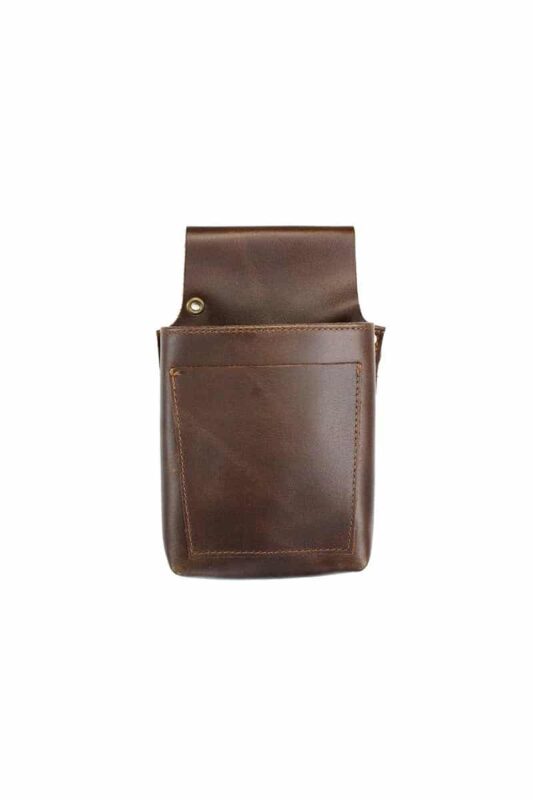
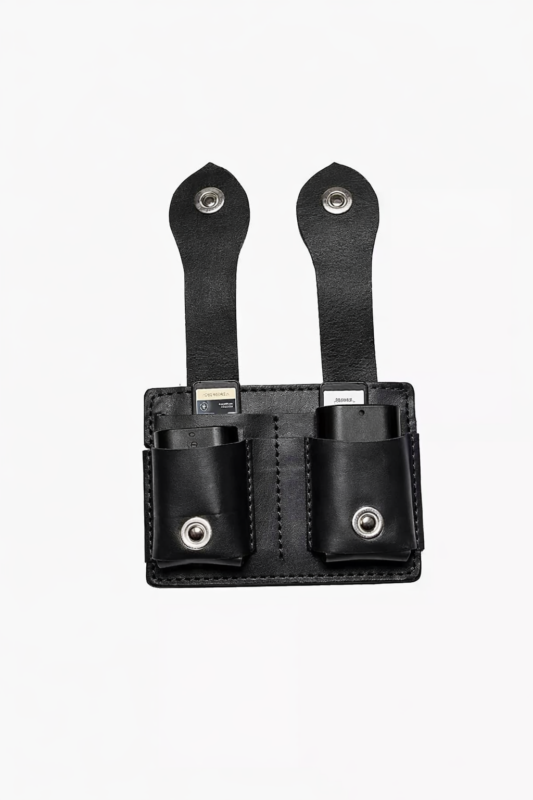
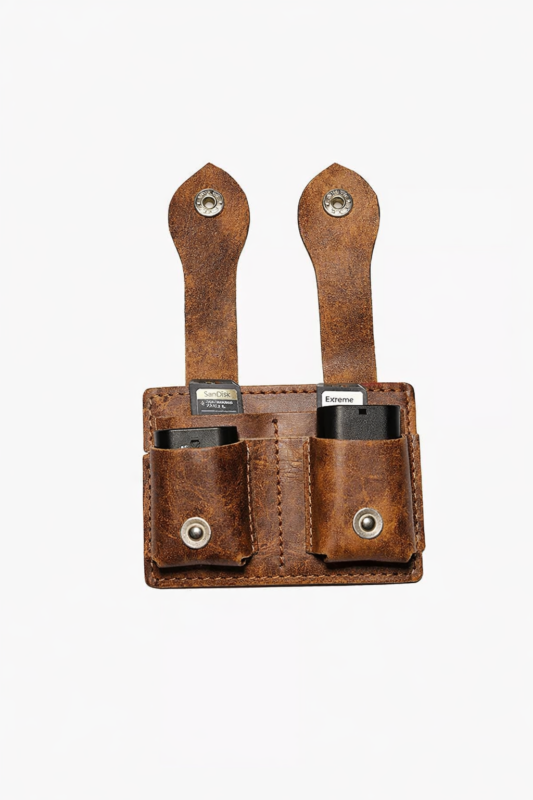
One body on the leather dual camera harness, loading the shoulders symmetrically, and one body in the single holster, loading the pelvis. Neither system runs at full load, and the pressure points halve.
The practical side benefit: the body in the holster is the one you use kneeling, the body on the harness is the one you bring to your eye most often standing up.
The most underrated and cheapest solution: change system during the day. Harness for getting ready and the ceremony, holster for the reception when you move more between tables. No tissue stays under pressure for twelve hours straight.
For this to work you need to switch without unscrewing anything. That is what the quick release kit with V3 clasp exists for: the plate stays on the camera, only the connection changes.
No carrying system cures an existing problem in your back, hip or neck. If the pain is constant or getting worse, the answer is not another piece of leather, it is an assessment by a professional. We write that even though we sell gear, because it is the right thing to write.
What gear can do is reduce the load on one specific point. What it cannot do is take it to zero.
Harnesses, holsters and quick release systems, all compatible with each other because the plate is the same.
Yes, and it is the configuration that spreads the load best. Set the harness first, then the belt, and check the two do not sit on the same point of your hip.
There is no number that works for everyone. The practical rule: if you feel the pressure point while you are still working, not just at the end of the day, you are carrying too much or you have adjusted it badly.
It moves the load onto the pelvis. Over a long day you feel it, differently from your shoulders. Alternating the two systems is the simplest way to avoid loading the same point all day.
No. Start from what you own and add the second piece, because the clasp kit is shared.
No account yet?
Create an Account












 Camera Straps Single
 Camera Straps Neck
 Camera Straps Wrist
 Other Camera Accessories
 Home Decor
 Mouse Pads
 MacBook Sleeves
 Desk Mats
 Bottle Lamps
 Edison Lamps
 Belts
Belts Bow Ties
 Keychains
 Wedding & Formal
 Camera Bags
 Belt Pouches
 Handbags
 Wallets & Cases
 USB Stick
 Engraved Panoply
 Engraved Icons